Banking Exchange | As social engineering and AI-powered scams grow more sophisticated, banks and credit unions face a new challenge: protecting legitimate customers who have been manipulated into authorizing fraudulent transactions.
In a Banking Exchange article, Frank Moreno, Chief Marketing Officer at Entersekt, argues that traditional authentication methods are no longer sufficient. Even when a customer uses legitimate credentials, a recognized device, and a valid security code, the transaction itself may be fraudulent.
Research from Entersekt highlights a growing disconnect:
46.7% of financial institutions still use SMS one-time passwords for authentication.
18.2% of consumers consider SMS one-time passwords the most secure authentication method.
More than 90% of consumers say security is an important factor when choosing a financial institution.
43% would consider leaving their financial institution based on its authentication methods alone.
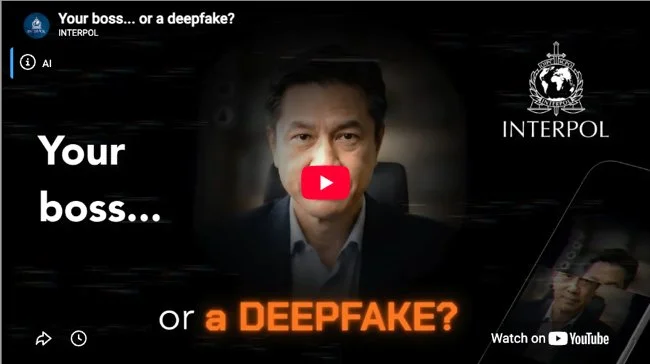
AI-generated phishing messages, cloned voices, and deepfake videos are making impersonation scams increasingly convincing. These tactics can persuade customers to approve payments that traditional fraud detection systems may consider legitimate.
Moreno argues that financial institutions must shift from detecting suspicious activity after the fact to preventing fraud in real time. That means combining stronger authentication with behavioral signals, device intelligence, and transaction monitoring to identify potential manipulation before funds are transferred.
At Operation Shamrock, we believe protecting consumers requires coordinated action across financial institutions, technology companies, law enforcement, and government. As scams grow more sophisticated, stopping fraudulent transactions before they complete must become a shared priority.
Full article: Social Engineering Is Changing the Fraud Prevention Game for Banks and Credit Unions