How Meta Responds to Impersonation on Facebook
When a detective reports that someone is impersonating him on Facebook to scam people, Meta says, “This does not violate community standards.”
Guest post from Brad Thorne, Financial Crimes Detective, City of Boise, Idaho. Last year, Detective Thorne shared how he'd helped stop two scams in one week by collaborating with local businesses. Read “Police Officer Helps Stop Scams in Real Time.”
Here’s Detective Thorne’s story:
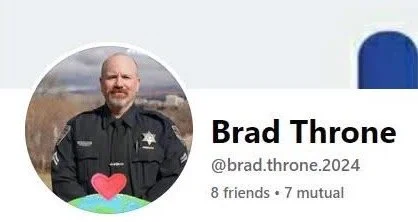
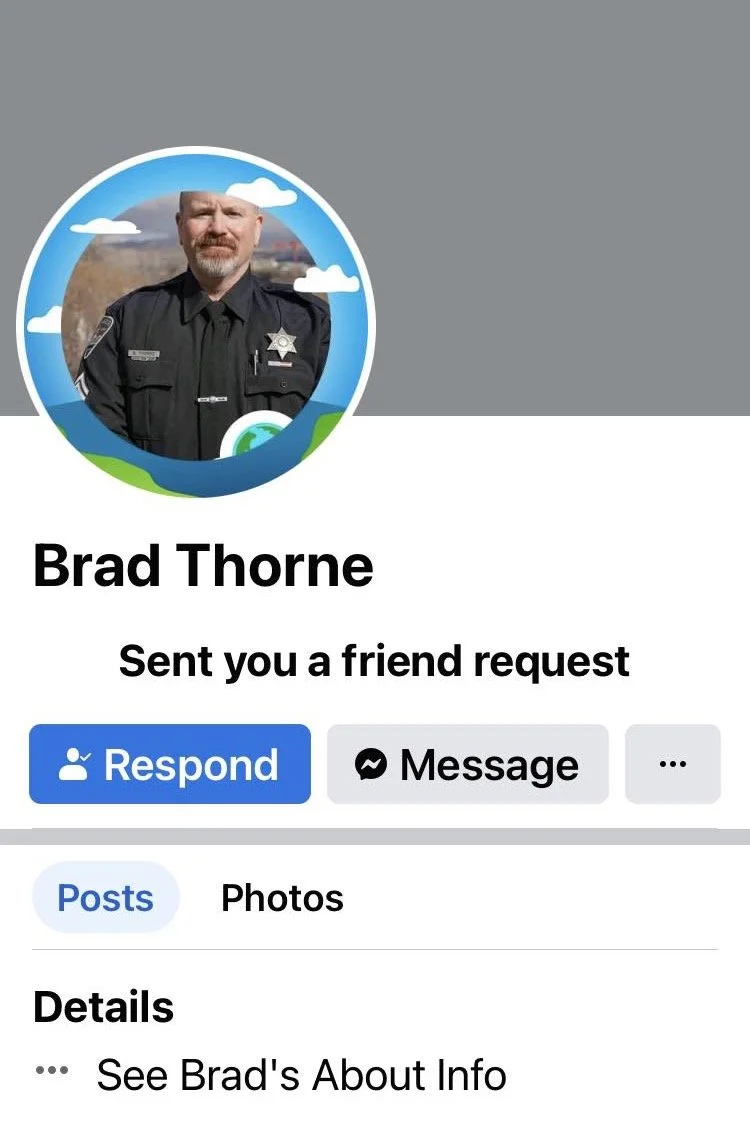
I started a Facebook page for one reason: to educate people in the community about scams and connect with fraud victims. My goal was to share information about scams, how they work, and how people can protect themselves. A few months after launching the page and getting about 1,000 followers, bad actors began creating fake Facebook profiles using my name and my photographs to scam people.
They used my name and took images of me in my Boise Police Department uniform directly from my legitimate page. They were obvious, low-effort fraud attempts that any basic review should have caught.
The scams the impersonators tried included:
“I’m busy—can you buy me a gift card?”
Promises of federal grant money
Relationship-based manipulation

Reporting the Impersonators to Meta
I received several messages from friends that they received a friend request from me, and gave me the link to the fake profile.
My followers would report the pages to me. I would report the fake profiles to Facebook and ask my followers to do the same. Eventually, Facebook would take them down. Or should.
I reported to Facebook that someone was posing as me. They responded that, “This does not violate community standards.”
I reported that the profile posing as me was committing fraud. Again, Facebook responded with “This does not violate community standards.”
Facebook, which has recently testified multiple times that they have rules and security, responded to me — a law enforcement officer — that the fake profile posing as me and actively trying to commit fraud didn’t violate its community standards?
To my knowledge, only one person actually lost money. That loss was part of a rental scam by the impersonators.
As I was fighting with Facebook, an elderly woman contacted me to see if the room I had for rent was still available. Someone posing as me had listed a room for rent. She had been communicating with the person posing as me and had sent a down payment for the rent. There was no room to rent.
Detective Thorne Confronts the Imposters
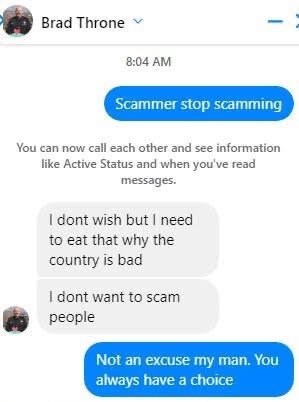
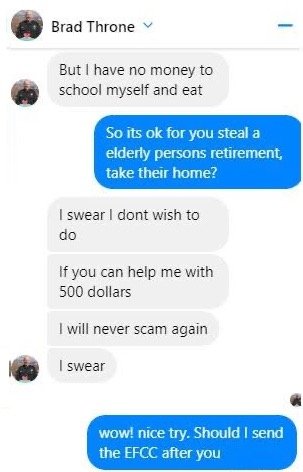
So I reached out to the imposter. They tried to manipulate me into feeling sorry for them. They said they had no choice but to scam. I asked him to send me a picture of himself and tell me his real name, and I might send him $50.
He sent me this picture, but wouldn’t send me his name. Then, he blocked me.
I continued to report the account. Each time, Facebook responded with “This does not violate community standards.” Months later, I believe the fake account was taken down, but only because many of my followers continued to report it. Meta didn’t act based on my reports, even though the fraudster was posing as me.
I encountered another victim at the same time whose Instagram account had been taken over. Despite multiple reports to Meta, I believe it’s still up and running with the bad actor after a year.
Meta’s Reaction to Imposters: Inaction
These are the simple cases. If Meta had standards and any real security, it could take down these accounts quickly. The scary part is that if they won’t take down the easy ones when reports come from law enforcement officers and the actual person being impersonated, then they clearly will not take down the more sophisticated bad actors. Their lack of response confirms what other families and investigators have reported.
Related Stories from Our Blog