The Lights Are Off in Sihanoukville
Cambodia’s notorious epicenter of the scam industry appears to be closed for business. But is it? And what does it mean?
Erin West, Founder, Operation Shamrock
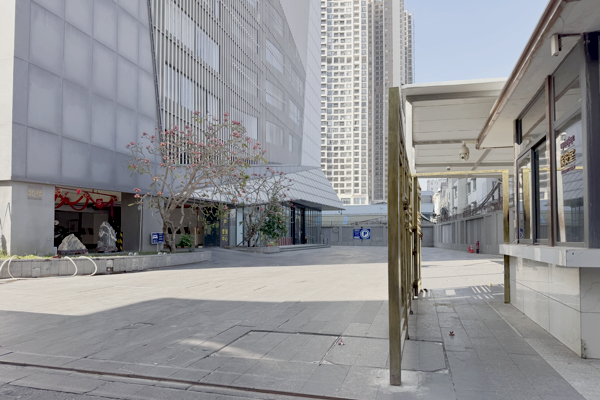
Standing on a street in Sihanoukville, Cambodia, looking at a dark and apparently empty Chinatown — the notorious epicenter of the world’s largest cryptocurrency scam operation — I felt something I hadn’t expected to feel. Hope.
And then, almost immediately, I felt the thing I always feel when hope shows up too quickly in this work: Suspicion.
I’ve been investigating Cambodia’s pig butchering industry since February 2025. I came back in February 2026 specifically to answer one question: Is the crackdown real?
Cambodia’s government has announced a sweeping campaign against the scam compounds that have made the country, in the eyes of the world, synonymous with human trafficking and financial fraud. The world — especially the victims and their families — wants to believe it. I came to look carefully before believing anything.
Here is what I found, and what I think it means.
What Drove Cambodia’s Scam Crackdown
Let’s start with the context, because the crackdown didn’t happen in a vacuum. Several significant events converged to create unprecedented pressure on the Cambodian government.
The United States indicted Chen Zhi — a figure widely understood to be one of the principal architects of Cambodia’s scam economy — a man whose business empire, the Prince Group, included both legitimate enterprises and the infrastructure that enabled the scam compounds to operate.
Chen Zhi was not extradited to the United States. China intervened, filed its own charges, and he was extradited to China. But the message landed: Even the people closest to this government were not untouchable.
Simultaneously, the U.S. government came into possession of approximately $15 billion in Bitcoin attributed to Chen Zhi’s operation. The U.S. and UK then coordinated sanctions against Prince Group–affiliated businesses. The financial walls were closing in.
For the first time, I saw evidence that the people running this industry are not completely immune from consequence. That matters. It’s real. And it is not enough.
This is the pressure that produced visible results. Not moral persuasion. Not victim testimony (though that has been critical for building the public record). What moved Cambodia was the credible threat of international financial and legal consequences reaching the people at the top of the system. That is an important lesson for what comes next.
Evidence that Something Real Is Happening
I am not dismissing what I saw. I want to be clear about that, because it is genuinely significant.
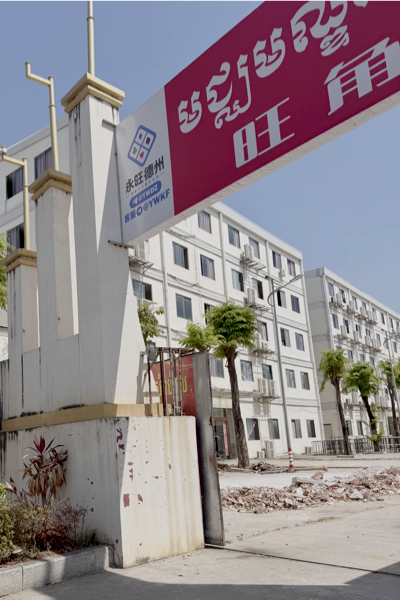
The Prince Group headquarters in Phnom Penh is shuttered. Legal notices are posted on the windows. Walking past and looking in, the space is empty — not reorganized, not rebranded, but closed. For a building that represented the crown jewel of an empire built on fraud and trafficking, that is not a small thing.
Prince Plaza, which my colleagues and I were physically blocked from entering last year — surrounded by armed men in police uniforms who demanded we delete our footage — was accessible on this trip. We could walk in. That is a meaningful change.
The over-the-counter cryptocurrency exchange businesses that facilitated money laundering — trading Tether for U.S. dollars and Thai baht — were visibly shut down across Phnom Penh. This is the financial plumbing of the operation, and disrupting it matters.
And Chinatown in Sihanoukville — the compound complex so large, so infamous, so emblematic of this industry that it has appeared in virtually every piece of journalism written about pig butchering — was dark. Lights off. Quiet. Apparently uninhabited.
I have spent two years working toward a moment where I could stand in that street and see what I saw. I do not take it lightly.
Reasons for Serious Skepticism
Despite evidence of progress toward disrupting the scam industry, I saw indications that suggest it may not be as significant as we hope. I also observed signs that I cannot in good conscience leave out of this assessment.
Permanent Closure or Pause? The gates of the Chinatown compounds are closed and locked, but you cannot get in to verify what’s inside. I can tell you the lights are off. I cannot tell you if the mattresses have been removed. I went inside an abandoned compound in Phnom Penh. I know what a facility looks like when it is paused rather than shuttered. The mattresses were stacked. The chairs were stacked. Thousands of chairs, waiting.

Mattresses stacked along the wall of a closed scam compound in Cambodia.
Doing the Math: The Cambodian government’s reported figure of 190 compounds shut down in approximately 19 days strains credulity. That is 10 compounds a day. Having driven a thousand miles across this country and seen how many compounds exist, and how large they are, I would need to see that number documented with specificity before I could treat it as reliable.
Past Experience: We have seen crackdowns before in Cambodia, Myanmar, and other countries in the region. The pattern is consistent: There’s a window of visible action, often coinciding with international scrutiny. A period of apparent closure follows the activity. Quietly, there’s a gradual return to operations as attention fades. The compound I walked through in Phnom Penh felt exactly like that pattern in miniature. A pause, not an ending.
Beyond the Walls: The human trafficking networks that supplied these compounds with workers did not dissolve. The money laundering infrastructure, while disrupted, was not dismantled. The criminal organizations that built and ran these operations still exist. What changed is that some of their most visible assets are temporarily offline, and some of their most prominent leaders are facing consequences. That is progress; it is not resolution.
What Actual Resolution Requires
I came into this work because I believe in the possibility of accountability. But I also spent enough years as a prosecutor to know that a raid is not a conviction, and a closed door is not a closed case.
A genuine end to Cambodia’s role as the global headquarters of pig butchering would require several things that a crackdown — however vigorous — does not automatically produce. Here are four things that need to happen:
Sustained international financial pressure — not a single sanctions action, but an ongoing, coordinated effort that makes it impossible to profit from Cambodia’s scam economy.
The prosecution and conviction of mid- and upper-level operators, not just the removal of workers from compounds.
Justice for victims, including restitution mechanisms for the billions stolen from people in the United States and around the world.
Treating trafficked workers as victims, not criminals. These people were forced at gunpoint to run these scams. If they get out of the compounds, they risk arrest for offenses such as overstaying their visas.
This cannot become the next “war on drugs.” It cannot be a campaign that generates impressive-sounding statistics for a season and then quietly returns to the status quo. The people who designed this industry are patient. They have shown they can wait out scrutiny. The international response has to be more durable than their patience.
The question is not whether Cambodia has taken action against the scam economy. The question is whether the world will stay present long enough to make it matter.
What I’m Watching in Cambodia
I’ll be direct about what would change my assessment from cautiously hopeful to genuinely hopeful.
Prosecutions, not just arrests.Charges filed and pursued through the judicial system against compound operators, not just workers.
Verified compound counts. Independent documentation from journalists, NGOs, or international monitors of the 190 shutdowns claimed.
Protection of trafficking victims. Evidence that the people forced to work in these compounds are receiving legal status, support, and a path home — not deportation or prosecution.
Financial network disruption.Evidence that the cryptocurrency channels, shell companies, and banking relationships used to move the money are being systematically dismantled.
Sustained access.The ability of journalists and monitors to return in six months, a year, two years, and find the same doors closed.
I stood on that street in Sihanoukville, and I felt the weight of what it meant to see those lights off. I thought of every victim I’ve spoken to. Every family that lost a parent’s retirement. Every person who came forward despite the shame because they wanted someone else to be spared.
They deserve more than a crackdown. They deserve an ending.
I'm going to keep watching. I'll be back.
Learn More on the Stolen Podcast
Related Stories from Our Blog