Scammers Leave Digital Footprints: A Detective’s Case for Why Scams Can Be Solved
Brian Mason of the Edmonton Police Service shares why investigating fraud beyond the individual victim cases to tie them to transnational cybercrime networks and is important — and possible.
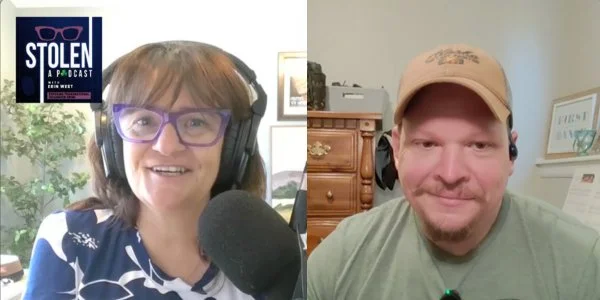
Episode 72: Erin West talks with Detective Brian Mason of the Edmonton Police Service, a leading Canadian expert in cybercrime and large-scale scam investigations. Injured in the line of duty in 2019, Mason turned to the one crime he believed was never fully investigated: fraud. Now he’s running a portfolio devoted to transnational organized crime, money laundering, and the networks behind scams.
The footprints, the fingerprints; everything is there. The data trail is there. We can find those digital pieces. — Brian Mason, Edmonton Police Service
Brian walks through the cases that shaped him, beginning with an 82-year-old romance scam victim who remortgaged her home and lost her life savings. Another involved a Canadian Armed Forces veteran who was defrauded when scammers hijacked a colleague’s Facebook profile and invited him to join her in an investment opportunity. Both investigations led to scammers in Lagos, Nigeria. He explains how IP addresses, emails, and phone numbers become a roadmap to offenders, and why simply asking overseas companies for data often works.
Prefer the audio version? Find Stolen on Apple Podcasts, Spotify, Amazon Music, and other major platforms.
Cases would go under-investigated. People laughed them off, which didn’t sit well with me. — Brian Mason, Edmonton Police Service
The conversation also covers Brian’s perspective on:
The scams he sees most often, including romance, crypto investment, and tech support refund fraud
How money mules funnel proceeds through shell companies tied to organized crime
What banks can do better, from stronger identity verification to acting immediately when investigators flag an account
Stopping Scams As They Happen
Brian describes Operation Maple Star, a joint operation between his agency, e U.S. Secret Service, and Collin County, Texas, that uses live scam intelligence to identify ongoing scams and connects with named contacts at banks, exchanges, and telecoms. When the team’s investigators identify a scam in progress, they reach out to named contacts at banks, exchanges, and telecoms. If they tell a bank that someone’s accounts are being targeted, 90% of the time, the bank locks down the account and has its fraud team reach out directly to the client. Meanwhile, Brian’s team may work with local law enforcement to send an officer to the victim’s home. Since March of this year, the operation has stopped more than US$148 million in scam funds.
We’ve talked for ages about this whole public-private partnership thing, but no one has ever tried it at scale. So we’re trying to push it at scale, and it’s working. — Brian Mason, Edmonton Police Service
3 Points about Fighting Scams from Brian Mason
1. The data trail is there; scams can be solved. Brian likens a fraud victim to a stabbing victim injured in a different way. Instead of physical evidence, scammers leave digital fingerprints: IP addresses, emails, and phone numbers can lead straight to a threat actor, and overseas companies often hand over data when asked.
2. Going after the larger organizations protects local communities. Arresting a local money mule isn’t enough. It cuts off one head of the hydra, but another takes its place. Meanwhile, the larger organization’s proceeds feed triads, drug trafficking, and terrorism financing. Brian won over skeptical administrators about going after the transnational organizations making that connection.
3. Public-private partnerships can stop scams while they are happening. Through Operation Maple Star, investigators call dedicated contacts at banks, crypto exchanges, and telecoms, and banks lock flagged accounts roughly 90% of the time. Brian also urges stronger know-your-customer (KYC) checks at banks and an end to the silos that slow data sharing.
If a department says, “We can’t afford to learn this,” you can. There are plenty of free things out there that you can access and learn to use. Does it take a little longer? Sure, but you can do it. — Brian Mason, Edmonton Police Service
How Can You Help Fight Scams?
Help protect your own community from scams by sharing what you learn. Subscribe to Stolen and leave a review where you listen so more people can hear from experts like Brian Mason.
If you’re in law enforcement, learn how your agency can work with banks and exchanges in your community. Explore Operation Shamrock’s Crypto Coalition network, where Brian says the Texas partnership behind Operation Maple Star took root.
Who Is Brian Mason?
Brian Mason is a constable and fraud investigator with Edmonton Police Service in Canada. He has 16 years experience in emergency services and specializes in large-scale scam operations and cyber-enabled crime. He currently coordinates a joint operation with the U.S. Secret Service using ethical hackers to target scam operations.
In 2020, Brian began to investigate small-scale frauds. Developing collaborative relationships with other agencies worldwide, he linked single-reporter scams to larger networks, establishing direct associations to transnational organized crime.
Brian presents locally and internationally on frauds and the risk of the global growth of scams. He advocates for greater attention on fraud, both in investigation and prosecution. He consults for agencies across Canada, the US, the UK, and India. He is a subject-matter expert on cyber-enabled crime and crypto investigations for the Royal Canadian Mounted Police.
Useful Links
3-5 relevant or mentioned links from podcast
Subscribe to Stolen for straight truth, survivor-centered storytelling, and bold conversations about the scamdemic and the people fighting back. Find Stolen on YouTube, Apple Podcasts, Spotify, Amazon Music, and other major podcast platforms.
Sponsors of Stolen

BioCatch prevents financial crime by recognizing patterns in human behavior, continuously collecting 3,000 anonymized data points – keystroke and mouse activity, touch screen behavior, physical device attributes, and more – as people interact with their digital banking platforms. With these inputs, BioCatch's models reveal patterns that distinguish the criminal from the legitimate.

Scamnetic is a leader in AI-powered scam detection and prevention, protecting individuals, businesses, and financial institutions from digital scams. With solutions like KnowScam, IDeveryone, and PayVerify, Scamnetic delivers real-time scam insights, identity verification, and intervention. Restoring trust, reducing losses, and empowering organizations to safeguard customers in an increasingly complex digital world.
Recent Episodes of Stolen