A Small-town Police Officer Takes on the Big World of Crypto Fraud
Mike Bliss didn’t know much about crypto fraud when he met his first victim in August 2025. With coaching from experienced peers, he now investigates fraud cases and helps other officers.
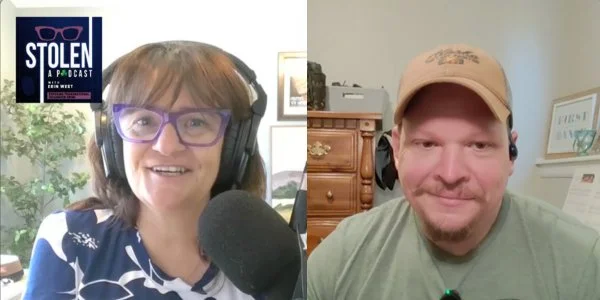
Episode 70: Erin West talks with Mike Bliss, a patrol officer in Fairway, Kansas, who dove headfirst into crypto fraud investigation after a single case pulled him in. In August 2025, a 27-year-old victim told Bliss she'd lost $15,000 through a crypto ATM — a concept he initially dismissed as untraceable “fake money.”
She said, ‘I just lost $15,000.’ She was distraught; she didn’t know what to do. And quite honestly, I didn’t know what to do. — Mike Bliss, Crypto Coalition
But the case intrigued him. He posted a message on a listserv and was lucky enough to connect with Tom Alber, known as “US Crypto Cop.” Alber drove out to Fairway in the middle of the night shift, walked Mike through tracing the funds, and introduced him to Operation Shamrock’s Crypto Coalition, a global network of law enforcement crypto investigators and analysts.
Prefer the audio version? Find Stolen on Apple Podcasts, Spotify, Amazon Music, and other major platforms.
From there, Mike learned everything he could and became deeply involved, working cases including an ongoing Georgia prison scam investigation and a multi-victim seizure. He describes the shifting tactics scammers use, particularly targeting elder residents in his community.
He and Erin discuss gaps that lead to scams going unreported: underfunded small law enforcement agencies, a need for better connections between local law enforcement and bank teams, and inconsistent state regulation.
Despite having little formal training or budget for expensive tracing tools, Mike frames his work as proof that motivated officers can make a real difference with the right support and community connections. He credits Operation Shamrock and fellow investigators with giving him purpose, and urges other officers and agencies not to let unfamiliarity stop them from helping victims.
“If a guy who’s terrible at math can do this, you can do it.” — Mike Bliss, Crypto Coalition
Conversation Highlights
A single case turned a patrol officer into a crypto fraud investigator. Mike had no background in cryptocurrency when a victim’s $15,000 loss led him to Tom Alber and the Crypto Coalition. Volunteer mentorship — not formal police training — became the foundation of his education in blockchain tracing.
Scam tactics are evolving faster than regulation. As Bitcoin ATM oversight tightens, fraudsters are shifting to Cash App, wire transfers, and gift cards, especially targeting elderly adults, while state laws like Kansas’s new 72-hour refund window struggle to keep pace.
Lack of funding doesn’t mean you can’t make a difference. Although Mike’s department can't afford expensive tracing tools, he’s found that collaboration between his peers in law enforcement, local businesspeople, and outside experts gives him opportunities to help victims.
This has been the greatest honor of my life. That’s why I wake up and check my phone. I'm like, ‘All right, Where’s my next trace?’ — Mike Bliss, Crypto Coalition
What Can You Do?
If you work in law enforcement and have never handled a crypto fraud case, don’t let unfamiliarity stop you from helping the next victim who walks through your door. Reach out to Operation Shamrock’s Crypto Coalition — the same network that helped Mike Bliss can connect you with investigators willing to trace the money and guide you through your first case.
Who Is Mike Bliss?
Mike Bliss is a patrol officer with a small law enforcement agency in northeast Johnson County, Kansas, and a passionate advocate for improving how law enforcement responds to cryptocurrency-related fraud. After beginning his law enforcement career in 2015, Mike spent nearly a decade serving in various roles, including Field Training Officer and patrol sergeant, where he focused heavily on training and mentoring other officers.
With little experience in crypto investigations, Mike taught himself how to trace transactions and follow the money, eventually writing 23 search warrants within his first three months at his new department. His work led him to connect with experienced investigators and become deeply involved in the cryptocurrency investigation community.
Mike is a member of the Operation Shamrock Crypto Coalition and is committed to helping investigators navigate complex cryptocurrency cases and ensuring scam victims receive the effort and support they deserve. He describes himself as the “Little Engine That Could” of crypto investigations, driven by curiosity, persistence, and a simple belief: “There’s always something we can do.”
Subscribe to Stolen for straight truth, survivor-centered storytelling, and bold conversations about the scamdemic and the people fighting back. Find Stolen on YouTube, Apple Podcasts, Spotify, Amazon Music, and other major podcast platforms.
Sponsors of Stolen
BioCatch prevents financial crime by recognizing patterns in human behavior, continuously collecting 3,000 anonymized data points – keystroke and mouse activity, touch screen behavior, physical device attributes, and more – as people interact with their digital banking platforms. With these inputs, BioCatch's models reveal patterns that distinguish the criminal from the legitimate.
Scamnetic is a leader in AI-powered scam detection and prevention, protecting individuals, businesses, and financial institutions from digital scams. With solutions like KnowScam, IDeveryone, and PayVerify, Scamnetic delivers real-time scam insights, identity verification, and intervention. Restoring trust, reducing losses, and empowering organizations to safeguard customers in an increasingly complex digital world.
Recent Episodes of Stolen