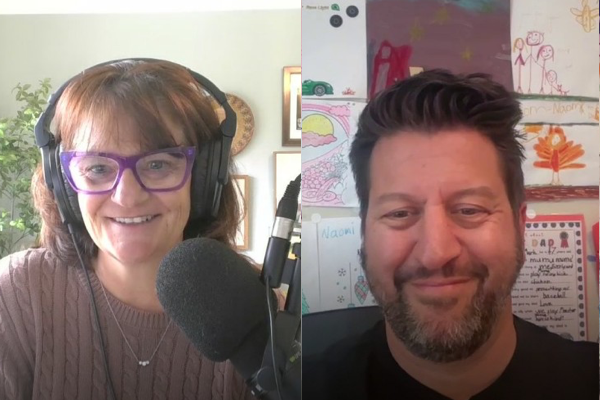
Dave Bowling and Gavin Lucky join Erin to talk about international security and the growing footprint of the scam industry.
Episode 76: Dave Bowling and Gavin Lucky, co-hosts of the On the Fringe podcast, met as Peace Corps volunteers in Indonesia and bring backgrounds in education, languages, and international security to their perspective. Cambodia becomes the starting point of their conversation with Erin West: a state-driven development model, heavy Chinese investment, and a booming Sihanoukville that has enriched elites far more than ordinary Cambodians.
The discussion widens to Myanmar’s autonomous armed territories, Thailand's military pressure on Cambodian scam compounds, and where criminal networks could take root next. They talk about areas outside the usual fraud-fighting bubble, including Haiti, Congo, and Colombian veterans lured abroad by fake job offers. They outline an idealist’s case for grassroots development and a more outward-looking American foreign policy.
You need to help local people at the ground level. You need to help people essentially find a way to help themselves. — Dave Bowling, On the Fringe
Prefer audio? Find Stolen on Apple Podcasts, Spotify, Amazon Music, and other major platforms.
Three Things to Consider
1. Captive states are the welcome mat. When a small, unelected elite controls how a state functions, criminal networks only need to build relationships with a few key people to gain access to an entire country. In Cambodia and Myanmar, laws exist on paper but go unenforced, so bribes and connections stand in for institutions.
2. Infrastructure can be a double-edged gift. Chinese-funded roads, ports, and casinos in Cambodia bring real conveniences and goodwill, but the guests describe them as "dual use," delivering their biggest rewards to Chinese and Cambodian elites and extractive industries. Locals, meanwhile, see rents triple and tourist dollars bypass them entirely.
3. Crackdowns are cosmetic, and the pattern is portable. Gavin argues Cambodia is sanitizing a bad-publicity problem rather than removing its root, with Thailand's military pressure the real catalyst. The same conditions of weak oversight and foreign investment point to potential next hubs in Uganda, Madagascar, Paraguay, Venezuela, and Peru.
Parting Thoughts
Scam compounds are not a Cambodian anomaly; they are a predictable product of weak institutions, concentrated power, and foreign money. Dave and Gavin argue cosmetic crackdowns will not end them, and that real disruption means supporting local economies, tracking patterns across borders, and paying attention before the next hub emerges.
Whoever controls the channel is able to control patronage within the country. And then you have essentially a captive state political economy. — Gavin Lucky, On the Fringe
Who Are Dave Bowling and Gavin Lucky?
Dave and Gavin co-host the On the Fringe podcast.
Davis (Dave) Bowling is the founder of GuideMie LLC, a travel consultancy for travelers seeking local knowledge, language skills, and curated expertise to explore more than tourist hotspots in Asia. A former educator, he taught English for nearly a decade in four countries, including service as a Peace Corps Volunteer in Indonesia. He earned a Master of International Affairs from the Bush School of Government & Public Service at Texas A&M University and an undergraduate degree in International Business Administration with a focus on Japan from the University of Utah. A lover of languages, Dave self-published his first book in 2024 titled Secrets of a Polyglot: How to Transform Your Life through Learning Foreign Languages.
Gavin Lucky is an international educator with over a decade of experience, having taught the humanities on three continents. A graduate of the University of Essex and with a Master’s from the University of St. Andrews, he trained as a specialist in international security studies before joining the Peace Corps. His work is interdisciplinary and cuts across different mediums. As a published poet, author, and podcaster, he is interested in the intersection of culture, identity, and conflict —preoccupations that also inform his work as an educator, both in and out of the classroom.
Subscribe to Stolen for straight truth, survivor-centered storytelling, and bold conversations about the scamdemic and the people fighting back. Find Stolen on YouTube, Apple Podcasts, Spotify, Amazon Music, and other major podcast platforms.
Recent Episodes of Stolen