Putting Survivors at the Center of the Scam Conversation
What happens when you stop talking about scam victims and start listening to them? The United Against Deception symposium exists to make it happen.
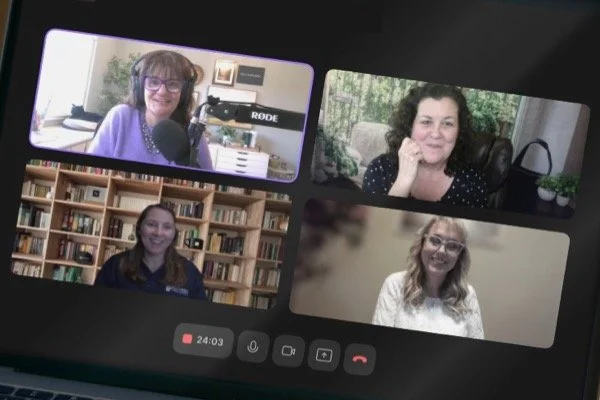
Episode 74: When Erin West invited the organizers of the United Against Deception symposium to join Stolen, she knew the conversation would be a hopeful one. The three women met during Operation Shamrock meetings for scam victims. They’d each seen plenty of events designed to teach investigators and financial institutions how to address the scam crisis, but almost none put survivors at the center.
Kathy Waters, Cathy Wilson, and April DeValkenaere saw a need for an event focused specifically on the needs of victims. Their answer was United Against Deception, a two-day event held in Kansas City in early October 2026.
The word symposium is deliberate. The goal wasn’t a few days of talk, but an actionable program attendees could carry home. Participants split into four groups: mental health and victim services, tech and social media, law enforcement and prosecution, and banking and financial institutions.
Prefer the audio version? Find Stolen on Apple Podcasts, Spotify, Amazon Music, and other major platforms.
On day one, they focused on identifying the gaps in victim support; on day two, they proposed solutions. Each group included survivors ready to say whether an idea would have made a difference in their scam experience.
Recorded just over a week after the event, their conversation covers what surprised them about the symposium, what they learned from the survivors in the room, and what they’d like to improve. They are candid, encouraging, and grounded in a simple belief: this is year one, and the work is only beginning.
Scammers are using connection to steal from people. We have to use connection too, whatever form that is. — Cathy Wilson, United Against Deception Symposium
Three Key Learnings from the United Against Deception Symposium
1. Stop the money first. When April asked the symposium audience who a victim should contact first, most said law enforcement. But it’s important to contact financial institutions first to stop the transfer, lock accounts, and preserve information. Kathy Waters, who talks with victims daily, said it made perfect sense: stop the money flow, then report the scam.
2. Connection is the best tool for breaking the spell. Scammers are experts at psychological manipulation and influencing victims. Cathy Wilson says no single thing helps victims realize they’re being misled. But real human connection helps, whether it’s a bank teller who asks questions or a family member who leads with curiosity instead of demands. Scammers use connection to steal, and she argues that helpers must use it to reach people.
3. The systems meant to help can hurt victims again. People likely to encounter victims need more training. Therapists who skip over the fraud, officers who ask why someone “fell for it,” and adult protective services teams that don’t investigate scams can feel like a second betrayal. Kathy Waters says victims who are turned away often never try to report at all. The good news is that she’s now hearing more stories of good local support and changing language.
What Next? A Call to Action
The symposium was only the start, and the United Against Deception 90-day Follow-up Webinar on January 14 is open to everyone, including people who didn’t attend. Join the online event to hear what came out of the roundtable discussions and help take on the additional projects the team is planning.
Who Are Our Guests?
Kathy Waters is the co-founder and executive director of Advocating Against Romance Scammers, a nonprofit dedicated to supporting victims of online romance scams and preventing financial exploitation. Kathy has become a trusted resource for social media platforms, media outlets, congressional staff, and international agencies seeking insight into romance fraud and the organized criminal networks behind it. She has logged more than 6,000 volunteer hours helping victims whose identities scammers have stolen.
April DeValkenaere is an award-winning forensic accountant and educator who works with older adult victims of financial crimes and their advocates. She is an adjunct professor at Marquette University, where she teaches graduate accounting students to prepare forensic accounting reports. In 2026, she founded Protect Your Fortress Inc., a nonprofit that empowers victims of financial crimes through education, prevention, and recovery support. With her background as a former banker, law enforcement officer, and white-collar crime paralegal for a prosecutor’s office, April provides consulting services nationwide.
Cathy Wilson is a Licensed Professional Counselor in Colorado and Arizona, and supports others as a counselor, advocate, author, speaker, and consultant. She supports clients through outpatient counseling and advocacy, as well as through her work as an author, speaker, and consultant. She is the author of The Emotional Impact of Being Scammed and How to Recover. She offers online video trainings on supporting victims of cybercrime. Find more information about her and access cybercrime victim resources at https://www.scamsurvivorhealing.com.
Subscribe to Stolen for straight truth, survivor-centered storytelling, and bold conversations about the scamdemic and the people fighting back. Find Stolen on YouTube, Apple Podcasts, Spotify, Amazon Music, and other major podcast platforms.
Recent Episodes of Stolen