A Former Hacker’s Second Act Fighting Cybercrime
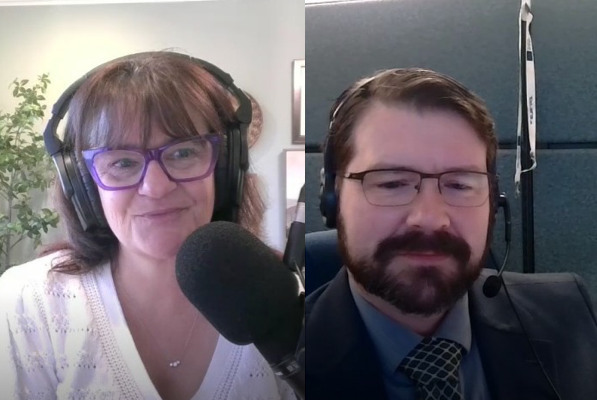
Hieu Ngo’s path to becoming a cybercrime investigator started in front of a federal court judge sentencing him for hacking and identity theft.
Episode 73: Hieu Ngo’s path to a career as a cybercrime investigator is anything but typical. From 2005 to 2012, Hieu was a hacker. He stole U.S. identities and resold them on the dark web. In 2012, a U.S. Secret Service investigation lured him from Vietnam to Guam, where he was arrested and eventually sentenced to serve time in a U.S. federal prison.
Meet Matt O'Neill, the U.S. Secret Service agent who pursued Hieu, arrested him, and became his mentor in episode 14 of Stolen.
Hieu tells Erin West about the investigation, his incarceration, and how a letter at the sentencing hearing changed his life direction. At the hearing, Hieu learned that the prosecution had received more than 10,000 victim letters. The judge picked one to read aloud. In it, the writer explained how she was struggling and suffering as a result of Hieu’s identity theft. The criminals who bought her information filed false tax returns and destroyed her credit score. As a result, she couldn't get a loan to pay for her home or afford to feed her kids.
He describes the lasting damage his stolen identities caused and the guilt he carries. Hieu offers a direct apology to the American people and explains how he used his incarceration to plan a different future.
Prefer the audio version? Find Stolen on Apple Podcasts, Spotify, Amazon Music, and other major platforms.
Today, Hieu is back in Vietnam, working as an investigator to help take down the scam industry targeting Western victims. He uses the skills he once used as a criminal to catch cybercriminals. He has an edge: He knows how they think.
He and Erin compare notes on the underground economy's changing landscape. Telegram has become a marketplace where stolen data, malware, and deepfake software are sold in plain view. Scam operations are moving out of massive compounds and into rented apartments and small warehouses.
Hieu also shares insight from trafficking victims still trapped in Myanmar, where he says conditions are worse than ever. He describes how the criminal groups are recruiting new workers by impersonating trafficked victims in romance scams and convincing their loved ones to come to Thailand.
Four Key Points about the Evolving Scam Industry
1. Telegram has become a one-stop shop for cybercrime. Hieu calls it “the new dark web," where anyone with a smartphone and some cryptocurrency can buy stolen identities, malware, and deepfake software and start a scam business. Operations that once required massive compounds now run out of rented apartments and small warehouses, increasingly staffed by willing participants as well as trafficked workers.
2. The danger inside the compounds is escalating. Conditions in Myanmar are worsening, with victims' phones tightly controlled, scammers impersonating trafficked workers to lure their families, and bosses telling victims they want people, not ransom money. His hope for the future rests on blockchain analysis and closer cooperation between law enforcement and the private sector.
3. Scam activity may be slowing in Cambodia, but it’s moving elsewhere. Many operations are moving out of Cambodia because of the crackdown. They’re looking for stable or protected places where they can commit cybercrime. One of those countries is Myanmar. They’re also trying to relocate to Vietnam, Armenia, Oman, and other Middle Eastern countries.
4. Give young people a playground, or criminals will give them a job. Hieu argues that arrests alone won’t stop cybercrime. Scam networks actively recruit technology and programming students to build fake investment platforms, deepfakes, and money laundering tools. Through his nonprofit, ChongLuaDao, he gives young people a place to build new anti-scam tools and mentors young investigators, so their skills and energy will go toward fighting cybercrime instead.
The conversation closes on hope: blockchain analysis, public-private collaboration, and the Vietnamese anti-scam nonprofit Hieu co-founded to give young people a better path than the one he took.
What Can You Do?
Learn more about Hieu's work and the anti-scam tools his team has built; visit chongluadao.vn.
If Stolen is helping you understand how this crime really works, subscribe and leave a review wherever you listen.
Who Is Hieu Minh Ngo?
Hieu Minh Ngo is a Vietnamese cybersecurity expert whose journey spans from convicted hacker to globally respected defender of cyberspace. Hieu was arrested in 2013 and sentenced in the U.S. for orchestrating an identity-theft ring affecting approximately 200 million Americans. After serving part of his sentence and cooperating with authorities, he was released in 2019.
Returning to Vietnam, Hieu redirected himself to cybersecurity. He joined the National Cybersecurity Centre, where he co-founded ChongLuaDao, a non-profit anti-scam initiative that has become a trusted national platform to detect and block phishing and fraud, protecting thousands of users.
Hieu shared his story at the 5th InterCOP Conference at INTERPOL headquarters and led a session on AI-driven scam detection at the INTERPOL Asia & South Pacific Cybercrime Working Group in Hanoi. He contributed threat intelligence to two major reports for the United Nations Office on Drugs and Crime.
Subscribe to Stolen for straight truth, survivor-centered storytelling, and bold conversations about the scamdemic and the people fighting back. Find Stolen on YouTube, Apple Podcasts, Spotify, Amazon Music, and other major podcast platforms.
Recent Episodes of Stolen