$196 Billion Stolen in Scams — And We’re Still Blaming Victims
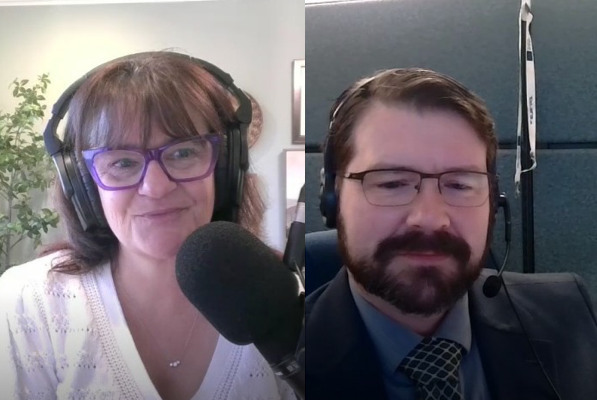
AARP’s Kathy Stokes and Erin West discuss multiple dimensions of the scam epidemic — including how we talk about victims, steps to prevent scams, and collective efforts in the fight against fraud.
Episode 50: Erin and Kathy dig into one of the most overlooked dimensions of the scam epidemic: the language we use — and the harm it causes. AARP’s Fraud Watch Network handles roughly 100,000 calls a year from victims and their families, and works to shift how the public, media, and policymakers talk about people who have been targeted by financial crime.
Prefer to listen? Find Stolen on Apple Podcasts, Spotify, Amazon, Podbean, and other major podcast platforms.
Together, Erin and Kathy share why phrases like “don't fall for it” and “too good to be true” fail victims at exactly the wrong moment. They talk about how to have smarter conversations with family members before a scam happens, and why a simple three-step framework — Pause, Reflect, Protect — may be the most powerful tool we have. (Think of it as the “Stop, Drop, and Roll” for today’s reality.)
It’s not about risky behavior. It’s that the scams are coming at us in every possible communication channel. We can’t avoid it. — Kathy Stokes, AARP
They identify what’s working in the fight: the calls for a national fraud strategy, crypto ATM legislation wins, early successes connecting cases across jurisdictions, and the GUARD Act legislation in Congress.
Scroll down for: Guest Bio - Chapters - Useful Links - Sponsors - More Stolen
4 Things to Think About
1. Victim-blaming language causes real harm. Kathy has spent years documenting the damage done by phrases like “you were scammed,” “you fell for it,” or “you should have known better.” These framings treat fraud as a personal failure rather than a crime committed by sophisticated transnational organizations. AARP’s Words Matter campaign and its Say This, Not That resource offer examples of language built around empathy, not judgment.
2. “Too good to be true” is useless advice (and so are most red-flag lists). Scams don’t hit people on their best days. They strike when someone is exhausted, distracted, or in a moment of fear. Memorizing 80 active scam types and 10 warning signs for each of them is an impossible task.
3. Use “Pause, Reflect, Protect” as a new framework for responding in the moment. Developed through collaboration with victims, law enforcement, linguists, and researchers, “Pause, Reflect, Protect” is a framework for responding when faced with three converging signals: an unexpected communication, a heightened emotional state, and urgency. When all three appear together, that’s the moment to pause before doing anything.
4. The true scale of fraud losses is wildly underreported. The FTC’s revised 2024 figures put total U.S. fraud losses at up to $196 billion when accounting for underreporting — a figure that would rank as a Fortune 17 company by revenue. Among losses under $1,000, only about 2% are reported to authorities; for losses over $1,000, that figure rises to just 6.7%. Shame is a deliberate feature of these crimes, not a side effect.
5. Collective action is gaining traction. Just a few examples:
AARP’s advocacy team has been involved in more than 15 wins on state-level crypto ATM regulations.
The Aspen Institute’s national fraud strategy playbook brought 80 organizations together and is now moving into an implementation phase.
The National Elder Fraud Coordination Center is connecting previously siloed investigations. In one example, this collaboration turned a $1 million local case into a $55 million prosecutable scheme.
Congress is advancing legislation to better equip local and state law enforcement. The Guarding Unprotected Aging Retirees from Deception Act (GUARD Act) works to permit State, local, and Tribal law enforcement agencies and grantees that receive eligible Federal grant funds to use the funds to investigate financial fraud, and to clarify that Federal agencies may assist these agencies in the use of tracing tools for blockchain and related technology, and for other purposes.
It’s not the victim’s fault. It is not a failure of the individual. It is a systemic failure. When we can all agree on that, then we can all be doing a hell of a lot more than we're doing right now. — Kathy Stokes, AARP
CALL TO ACTION
Do You Know Someone Who Might Be Targeted — Or Has Been?
Start a conversation before a crisis hits. Tell your parents, your aunt, your adult kids: “These scams are the number one financial crime in the country, and they come for all of us. Let’s have each other’s backs.”
Sign up for AARP’s free Fraud Watch Network “watchdog alert” bi-weekly newsletter for specific, plain-language explanations of the scam types targeting people right now.
Go to AARP’s Say This, Not That for practical guidance about how to talk (and what not to say) when someone you love is going through a fraud experience.
If you or someone you know has already been victimized, call the AARP Fraud Watch helpline: 1-877-908-3360. You don’t have to be an AARP member to call, and no one there will tell you it was your fault.
Who Is Kathy Stokes?
A nationally recognized leader in fraud prevention, Kathy Stokes leads AARP’s fraud strategy and heads the AARP Fraud Watch Network, which focuses on prevention through education and systemic change, and on supporting fraud victims. Kathy and her team have launched a national campaign to change the narrative around fraud victimization and provide a simplified educational effort to help people recognize and prevent fraud.
She also guided AARP in becoming a founding member of the National Elder Fraud Coordination Center, a public‑private partnership that supports law enforcement in investigating elder fraud. She is also an advisor to the boards of the International Association of Financial Crimes Investigators and to the Senior Issues Committee of the North American Securities Administrators Association. She also serves as Board Chair to the National Elder Fraud Coordination Center and is on the board of the North America Chapter of the Global Anti-Scam Alliance.
Episode Chapters
00:00 Understanding Victim Support and Education
03:02 Changing the Narrative on Fraud Victims
06:08 The Importance of Community for Victims
09:00 Evolving Language and Media Representation
11:47 Effective Communication with Victims
15:01 Empathy Towards Victims and Their Families
18:00 Recognizing Scams and Preventative Measures
20:58 The Active Pause: A New Defense Approach
24:38 Understanding Emotional States in Scams
27:08 The Role of Technology in Fraud Prevention
29:44 Systemic Failures and the Need for Collective Action
30:45 National Strategies and Collaborative Efforts
33:05 The Shift in Policy and Legislative Attention
37:04 Addressing Crypto ATMs and Regulatory Successes
39:50 Steps for Victims of Financial Crimes
45:25 Legislative Solutions and Future Directions
Useful Links
Subscribe to Stolen for straight truth, survivor-centered storytelling, and bold conversations about the scamdemic and the people fighting back. Find Stolen on YouTube, Apple Podcasts, Spotify, Amazon Music, and other major podcast platforms.
Sponsors of Stolen
BioCatch prevents financial crime by recognizing patterns in human behavior, continuously collecting 3,000 anonymized data points – keystroke and mouse activity, touch screen behavior, physical device attributes, and more – as people interact with their digital banking platforms. With these inputs, BioCatch's models reveal patterns that distinguish the criminal from the legitimate.

Scamnetic is a leader in AI-powered scam detection and prevention, protecting individuals, businesses, and financial institutions from digital scams. With solutions like KnowScam and IDeveryone, Scamnetic delivers real-time scam insights, identity verification, and intervention. Restoring trust, reducing losses, and empowering organizations to safeguard customers in an increasingly complex digital world.
Recent Episodes of Stolen