“I Thought LinkedIn Was Safe” — How a Utah Woman Lost $850,000
Anola Johnson shares her story of a romance scam and what she learned about manipulation, social media, and how to turn her experience into advocacy.
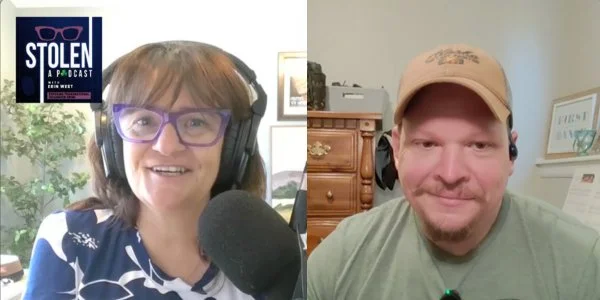
Episode 60: Anola Johnson believed LinkedIn was too professional a platform for scammers to reach her. She was wrong. A connection request that arrived two days after a work trip led to a two-year relationship with a charming “oil rig engineer” who never actually existed — and a total loss of roughly $850,000 through wire transfers, a drained home equity loan, gift cards, and cryptocurrency ATMs.
In this conversation with former prosecutor Erin West, Anola breaks down exactly how the manipulation worked, why intelligence and social connection offer no real protection, and how she rebuilt her life into podcast episodes and legislative testimony on crypto ATM regulation.
Prefer the audio version? Find Stolen on Apple Podcasts, Spotify, Amazon Music, and other major platforms.
Scammers Target Empathy, Not Naivety
Anola pushes back hard on the stereotype of the lonely, unintelligent scam victim. She had a career, a large supportive family, and no history of being an easy mark. Scammers don’t screen for intelligence. They look for people who are caring, empathetic, and willing to connect — which describes most people. That framing matters because it explains why this happens to professionals, parents, and people with advanced degrees just as often as anyone else.
The Playbook Is Remarkably Consistent
Anola outlines the recurring tactics scammers use to build trust before asking for money. It starts with unsolicited contact from a stranger and a quick push to move conversations to a different platform. The new contact has a sympathetic backstory, a career that conveniently explains spotty communication, and claims of financial independence. The point of no return, in Anola’s view, shows up as intense declarations of love and terms like “soulmate” within just a few weeks.
Financial Damage Compounds and Diversifies
What began as a $50,000 crypto “investment” escalated into wire transfers of $1.4 million and $180,000 to overseas accounts, a $350,000 home equity loan, maxed-out credit cards, cash shipped in a package, and money funneled through cryptocurrency ATMs — where Anola later learned machine owners were skimming 30–35% of every transaction. The scam also cost her a job, since months of constant manipulation made it impossible to focus at work.
Recovery Can Lead to Advocacy, Not Silence
After a federal agent’s call broke the spell, Anola told her family, began rebuilding, and eventually launched her own podcast, Romance Scam Rebellion, to combine catharsis with education. She has since testified before the Utah legislature on cryptocurrency ATM regulation and continues to speak publicly about the psychological mechanics of romance scams so other targets recognize the pattern earlier than she did.
Call to Action
If a new online connection asks you to move the conversation off-platform, professes love within weeks, or ever asks you for financial assistance, stop and talk it through with a family member or your bank before acting.
Listen to Anola’s own podcast, Romance Scam Rebellion, for a deeper look at the psychology behind these schemes.
Who Is Anola Johnson?
Anola Johnson is the host of Romance Scam Rebellion, a survivor-led podcast that takes listeners inside the full progression of modern romance fraud—from the first innocent message to the devastating emotional and financial aftermath.
After enduring an 18-month romance scam that began in 2023, Anola turned her experience into a mission of public education, advocacy, and prevention. Through her podcast, speaking engagements, and media appearances, she helps others recognize the predictable patterns scammers use to build trust, manipulate emotion, and exploit victims over time.
Her work has led to collaborations and interviews with AARP, including an appearance on The Perfect Scam. She has also testified before the Utah Legislature on crypto ATM regulations and continues to advocate for stronger protections against the financial “exit ramps” scammers rely on.
Anola is committed to being a clear, relentless voice for awareness—helping people understand what’s coming their way and how to stay safe.
Subscribe to Stolen for straight truth, survivor-centered storytelling, and bold conversations about the scamdemic and the people fighting back. Find Stolen on YouTube, Apple Podcasts, Spotify, Amazon Music, and other major podcast platforms.
Sponsors of Stolen
BioCatch prevents financial crime by recognizing patterns in human behavior, continuously collecting 3,000 anonymized data points – keystroke and mouse activity, touch screen behavior, physical device attributes, and more – as people interact with their digital banking platforms. With these inputs, BioCatch's models reveal patterns that distinguish the criminal from the legitimate.
Scamnetic is a leader in AI-powered scam detection and prevention, protecting individuals, businesses, and financial institutions from digital scams. With solutions like KnowScam, IDeveryone, and PayVerify, Scamnetic delivers real-time scam insights, identity verification, and intervention. Restoring trust, reducing losses, and empowering organizations to safeguard customers in an increasingly complex digital world.
Recent Episodes of Stolen