A Scam Victim’s Four-year Search for the People Who Took His Money
After pig-butchering investment scammers take $700,000, one man goes on a four-nation quest for answers and justice.
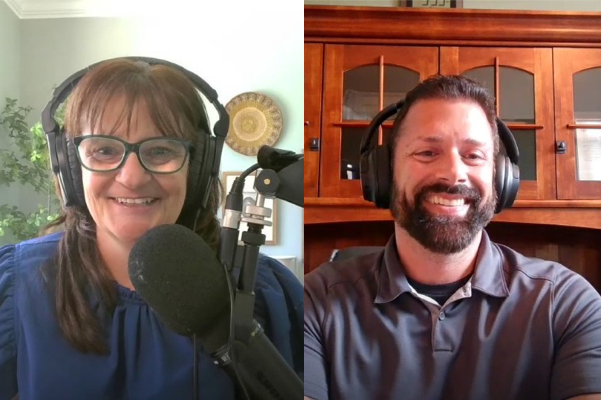
Episode 65: It was 2021. Don was a retired engineer building his dream home in Florida when a Facebook message from a “friend of a friend” changed his life. What began as a slow-building relationship turned into a pig-butchering scam that cost him $700,000. What followed was a four-year, self-funded investigation spanning four countries.
In this episode, host Erin West talks with Don about one of the earliest examples of a pig-butchering scam she’s heard of. He talks about how the scam originated, how he transferred money to the scammers through multiple platforms, and what happened when he reported the scam to authorities. He maps out how he traced his stolen crypto through multiple exchanges, obtained detailed records about his scammers in China, and personally met with police in Singapore and Laos — all while the U.S. Secret Service told him it was too busy to help.
Prefer the audio version? Find Stolen on Apple Podcasts, Spotify, Amazon Music, and other major platforms.
3 Things to Know about Pig Butchering Scams
1. Pig butchering scams are built on trust, not urgency.
Many scams are designed to create a sense of urgency and get people to move quickly so they don’t realize what’s happening. Pig butchering is a long con. Don’s scammer spent months building a trusting relationship. She shared a detailed backstory, moved the conversation from Facebook to WhatsApp, and had several calls with him to chat about travel and hobbies. All that came before any mention of money. By the time investing in crypto came up, Don had no reason to doubt her.
2. A single click can hand over total control.
His scammer had Don set up a Coinbase wallet, then gave him another URL to use. When an ad popped up, he closed it. In reality, that one click activated a decentralized app inside his Coinbase wallet, giving the scammers full access. It’s a technical detail most victims — and many investigators — don’t fully recognize until it’s too late. When Coinbase questioned some of his transactions, he moved to Kraken, then Gemini Exchange.
I wired money to Coinbase. They thought I was money laundering, so they said ‘No.’ They cut it off. — Don, investment scam survivor
3. Victims sometimes out-investigate the institutions meant to protect them.
In 2022, crimes like this were largely unknown to local law enforcement in Florida, so they sent him to the U.S. Secret Service. The USSS did initial investigations and helped him recover about $29,000. But they didn’t have the resources to go for the full $700,000. So, Don hired a forensics firm, obtained know-your-customer (KYC) records directly from the OKX exchange that identified two Chinese nationals, tracked wallet transactions on the blockchain, and even funded a Chinese law firm to travel to a scammer’s home district. He brought all his findings to law enforcement in the U.S., China, Singapore, and Laos, but got limited help.
I could go in the block exchange... I could see millions of dollars moving around. But I couldn’t get my hands on it. — Don, investment scam survivor
Cross-border enforcement is where these cases go to die. Even with the passports, home addresses, and IP addresses of the scammers in hand, Don hit dead ends in every jurisdiction. The Secret Service said its officers were too busy, Chinese police declined to prosecute, Singapore police refused to confirm a fake ID, and Laotian authorities said his IP evidence was too old for them to act on.
I was American, and I couldn’t prove that the fraud actually happened within Singapore. — Don, investment scam survivor
Scroll down for: Guest Bio - Chapters - Useful Links - Sponsors - More Stolen
Who Is Don?
A retired civil and oceanographic engineer from Pennsylvania, Don spent his career in the oil industry, working in locations from Scotland to Angola before settling in Florida. In 2021, he became an early victim of a pig-butchering crypto scam that cost him roughly $700,000. When law enforcement Don conducted his own international investigation — tracing funds through crypto exchanges, obtaining identification records of suspects, and traveling to China, Singapore, and Laos to pursue leads with local police and attorneys. He recovered a fraction of his losses through the U.S. Secret Service, running into repeated challenges with foreign law enforcement.
Episode Chapters
07:45 Don’s Background and Early Experiences
09:51 Initial Contact with the Scammer
13:21 Crypto Scam Unfolds
16:20 Investigation and Recovery Efforts
20:48 Journey Begins: Tracking Down Scammers
22:20 Challenge of Fake Tokens
24:16 International Investigations: Seeking Justice
26:26 Struggles with Law Enforcement
27:55 Frustration of Navigating Foreign Systems
30:01 Ongoing Fight Against Scams
Useful Links
Learn about the pig-butchering lifecycle and how scammers use a highly scripted process to steal as much money as they can from individual victims.
Meet Mary, another scam survivor who used AI to investigate her own romance scam case.
Subscribe to Stolen for straight truth, survivor-centered storytelling, and bold conversations about the scamdemic and the people fighting back. Find Stolen on YouTube, Apple Podcasts, Spotify, Amazon Music, and other major podcast platforms.
Sponsors of Stolen
BioCatch prevents financial crime by recognizing patterns in human behavior, continuously collecting 3,000 anonymized data points – keystroke and mouse activity, touch screen behavior, physical device attributes, and more – as people interact with their digital banking platforms. With these inputs, BioCatch's models reveal patterns that distinguish the criminal from the legitimate.
Scamnetic is a leader in AI-powered scam detection and prevention, protecting individuals, businesses, and financial institutions from digital scams. With solutions like KnowScam, IDeveryone, and PayVerify, Scamnetic delivers real-time scam insights, identity verification, and intervention. Restoring trust, reducing losses, and empowering organizations to safeguard customers in an increasingly complex digital world.
Recent Episodes of Stolen