Why Banks Get Blamed for a Scam Crisis They Didn’t Start
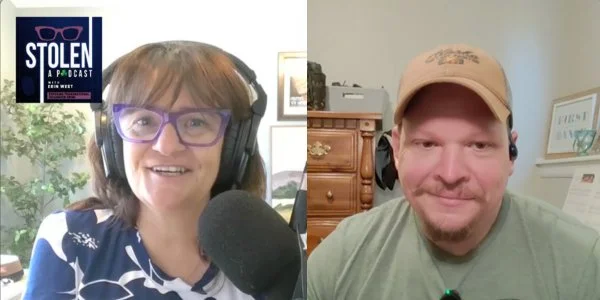
Lenny Gusel started his career using tech to fight financial fraud. These days, it’s a much more complex challenge, with answers that are organizational as much as technical.
Episode 66: Lenny Gusel’s career tracks the entire arc of digital fraud fighting to date. In the 1990s, Gusel built the alert module for one of the first online banking sites. Today, he works to equip the financial industry with the tools and know-how to fight scams as head of fraud solutions for North America at Feedzai. He and Erin dig into:
How fraud detection actually works
Why banks have been unfairly positioned as the last line of defense against pig-butchering scams
Why the biggest obstacle to stopping fraud isn’t technology, but organizations refusing to share data
Prefer audio? Find Stolen on Apple Podcasts, Spotify, Amazon Music, and other major platforms.
“There isn’t anyone in society at this point that doesn’t have a friend or family member who’s been impacted by some kind of scammery.” — Lenny Gusel, Feedzai
Four Things to Know about Banking and Digital Fraud
1. Fraud detection was built to find a needle in a haystack without slowing anyone down.
Gusel wrote the alert module for one of the first online banking sites in 1997, back when fraud monitoring meant watching bill-pay activity and logging IP addresses. Today's systems layer device fingerprinting with behavioral biometrics, measuring how hard someone presses a key or holds their phone. These bits of data support the construction of what Gusel calls an invisible force field that allows the overwhelming majority of legitimate transactions while hunting for the fraction that isn't.
2. Banks have unfairly become the “last mile” of scams.
In a pig-butchering or long-term investment scam, by the time a wire request reaches a teller, a victim has already been isolated from family, groomed for weeks or months, and coached to distrust the very person trying to help them. A 20-something teller cannot convince the target of a criminal who spent months manufacturing trust to stop what they’re doing, even as banks pour money into training staff to recognize and interrupt exactly that dynamic.
“There is a lot to be said for ratcheting up the level of pain that regulation can provide to some of social media.” — Lenny Gusel
3. Everyone is holding one puzzle piece, and nobody’s sharing.
Fraud, cybersecurity, and identity teams often run on separate technology stacks within a single bank. They’re invisible to each other. This reality mirrors the same issue across law enforcement agencies that don’t share information with one another. No one has the full picture. Gusel argues this data fragmentation — as opposed to a lack of technology or will — is the real barrier to stopping fraud at scale.
4. The industries profiting from scams don’t feel the pain that forces banks to act.
Regulation, financial loss, and reputational damage pressure banks to invest in fraud prevention. Meanwhile, social media and telecom companies — the channels scammers actually use to reach and manipulate victims — face none of that pressure. And they very often benefit financially from the status quo. Gusel is direct: Regulation alone won't fix this unless it changes who feels the pain of inaction.
“This is a society-level issue across every layer of how we interact with one another and technologies that we use.” — Lenny Gusel
Who Is Lenny Gusel?
Lenny Gusel is Head of Strategy & Advisory, North America for Feedzai. Lenny is a distinguished leader with over two decades of expertise in the financial Fraud, Identity, and Authentication domains. His domain journey began as a product leader for NICE Actimize, where he was at the forefront of cyber-enabled online banking fraud. He moved into strategic roles at Bank of America and JPMorgan Chase to drive transformation and execution for Fraud and Identity Platforms. Lenny took on operational leadership as Head of Customer Trust & Security for Robinhood, and at a leading crypto exchange. At Feedzai, Lenny’s focus is to enable and equip the financial industry with the tools and know-how to fight fraud and scams and deliver trusted and secure experiences to their customers.
Learn More
Read essays from Operation Shamrock’s Erin West and Matt Hogan in Feedzai’s ebook, “The Blueprint for a World of Safer Money.”
Learn more about how social media platforms profit from the actions of scammers:
Reuters: “Meta Tolerates Rampant Ad Fraud to Safeguard Billions in Revenue”
Center for Countering Digital Hate: “Meta Allowed Medicare Scammers to Generate 215M+ Views on Ads”
Subscribe to Stolen for straight truth, survivor-centered storytelling, and bold conversations about the scamdemic and the people fighting back. Find Stolen on YouTube, Apple Podcasts, Spotify, Amazon Music, and other major podcast platforms.
Sponsors of Stolen

BioCatch prevents financial crime by recognizing patterns in human behavior, continuously collecting 3,000 anonymized data points – keystroke and mouse activity, touch screen behavior, physical device attributes, and more – as people interact with their digital banking platforms. With these inputs, BioCatch's models reveal patterns that distinguish the criminal from the legitimate.

Scamnetic is a leader in AI-powered scam detection and prevention, protecting individuals, businesses, and financial institutions from digital scams. With solutions like KnowScam, IDeveryone, and PayVerify, Scamnetic delivers real-time scam insights, identity verification, and intervention. Restoring trust, reducing losses, and empowering organizations to safeguard customers in an increasingly complex digital world.
Recent Episodes of Stolen