Building a National Blueprint to Fight Scams
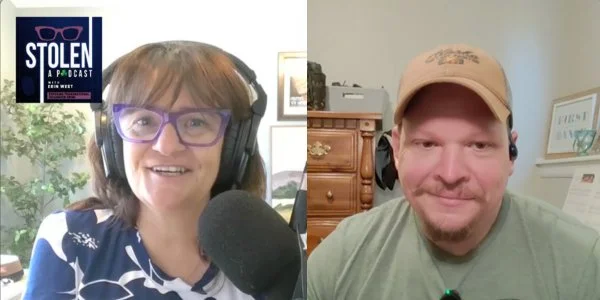
Kate Griffin talks about bringing people together to identify scam-fighting strategies, then working to turn strategy into action at the Aspen Institute.
Episode 62: Kate Griffin has spent the last two years doing something most people said couldn’t be done: Getting banks, tech platforms, telecoms, law enforcement, and nonprofits to agree on a shared strategy to fight scams.
Kate leads the Aspen Institute’s Financial Security Program scam-prevention work and visits the Stolen podcast to talk about bringing together 80 organizations to build a national strategy for fighting scams — and what happens now that the blueprint is written.
Prefer the audio version? Find Stolen on Apple Podcasts, Spotify, Amazon Music, and other major platforms.
Kate and Erin West trace how the project emerged from a national financial inclusion strategy in 2024, why “who’s on the bus?” was the first and hardest question to answer, and how curious questions — not consensus-forcing — brought 80 competing institutions to a shared blueprint.
She explains why data sharing remains the hardest problem in the ecosystem, why she worries about over-indexing on consumer education campaigns, and what it will take to turn a 70-page strategy document into real legislative and industry action.
5 Key Points on Building a National Scam Strategy
#1. Consensus starts with curious questions, not compromise. Griffin’s team spent months on one-on-one calls with fraud leaders from 80 institutions before ever putting them in the same room. They started by mapping where each organization’s “heat and momentum” already existed rather than trying to convince anyone the problem was real.
#2. Data sharing sounds simple until you scratch the surface. Every sector operates under different legal frameworks, incentives, and definitions of what data even matters — turning a seemingly obvious fix into the strategy’s stickiest unresolved issue.
“We like to talk a lot about data sharing, but we actually need to talk a lot more about what data sharing matters.”— Kate Griffin, Aspen Institute
#3. Education campaigns fade fast; point-of-intervention warnings stick. Research shared with the task force showed that mass awareness campaigns have limited lasting impact compared to real-time warnings delivered in the moment someone is about to send money.
#4. The blueprint isn’t a legal document — and that’s the point. By explicitly not requiring institutional sign-off, Aspen created space for dozens of organizations with divergent legal risk tolerances to speak candidly under Chatham House Rule.
#5. Momentum on Capitol Hill is real, but scattered. Roughly 26 scam-related bills have been introduced this Congress, with a third of members endorsing legislation on a fully bipartisan basis. However, the field still lacks a concerted strategy to point that energy in one direction.
Scroll down for: Guest Bio - Chapters - Useful Links - Sponsors - More Stolen
Who Is the Aspen Institute’s Kate Griffin?
Kate Griffin leads scam prevention strategy work at the Aspen Institute's Financial Security Program, where she convened the 80-member task force behind the first U.S. national blueprint for fighting scams, released in September 2025. She now heads the Institute's follow-on Scam Prevention Initiative, working to translate that strategy into industry and policy action.
Episode Chapters
00:25 Introduction to Kate Griffin and the Aspen Institute
08:11 The Role of Financial Institutions in Fraud Prevention
10:50 Building a National Strategy Against Scams
13:05 The Importance of Collaboration Across Sectors
15:54 The Four Working Groups and Their Objectives
20:51 Data Sharing and Its Challenges
23:21 Measuring Effectiveness in Fraud Prevention
28:20 Building Collaborative Networks for Scam Prevention
30:27 Engaging Congress: A Call for Action
34:58 Creating a Defensive Mechanism Against Scams
38:31 Data Sharing: The Key to Effective Scam Prevention
42:30 Balancing Privacy and Fraud Prevention
Useful Links
3-5 relevant or mentioned links from podcast
Subscribe to Stolen for straight truth, survivor-centered storytelling, and bold conversations about the scamdemic and the people fighting back.
Sponsors of Stolen
BioCatch prevents financial crime by recognizing patterns in human behavior, continuously collecting 3,000 anonymized data points – keystroke and mouse activity, touch screen behavior, physical device attributes, and more – as people interact with their digital banking platforms. With these inputs, BioCatch's models reveal patterns that distinguish the criminal from the legitimate.
Scamnetic is a leader in AI-powered scam detection and prevention, protecting individuals, businesses, and financial institutions from digital scams. With solutions like KnowScam, IDeveryone, and PayVerify, Scamnetic delivers real-time scam insights, identity verification, and intervention. Restoring trust, reducing losses, and empowering organizations to safeguard customers in an increasingly complex digital world.
Recent Episodes of Stolen