Rewriting the Fraud Conversation to Focus on Empathy
Susan Ralston outlines the evolution of fraud and why she considers it a human, emotional crime whose victims deserve empathy over judgement.
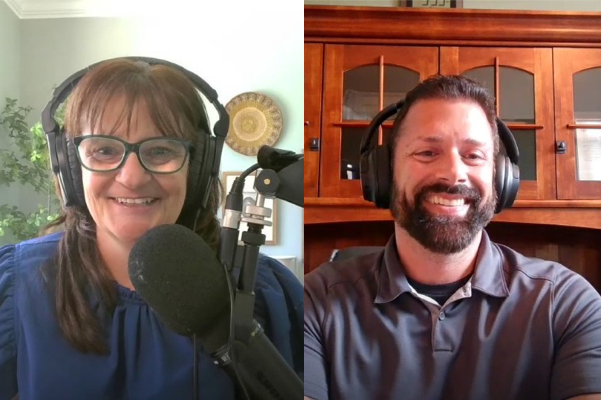
Episode 68: Erin West meets with Susan Ralston from Tower Federal Credit Union to talk about changing the fraud conversation to focus on empathy. Susan’s career started at a grocery store cash register and evolved into decades of frontline fraud-fighting experience.
Susan traces the transformation of fraud from small-town check washing to organized, transnational scam operations that exploded after COVID-19. She explains why considers fraud to fundamentally human, emotional issue. And she shares how her team trains credit-union staff to spot red flags, avoid judgment, and slow suspicious transactions before it’s too late to help the member.
We need to put our banker hats down and be human. — Susan Ralston, Tower Federal Credit Union
Prefer the audio version? Find Stolen on Apple Podcasts, Spotify, Amazon Music, and other major platforms.
Five Key Points from Susan Ralston
1. Fraud has evolved from local to organized, transnational crime. Susan recalls that early in her career, fraud usually meant shoddy counterfeit checks and local mailbox thefts. Fraud evolved and surged dramatically after COVID-19. Today’s fraud involves sophisticated, organized crime networks using strategies including mule accounts and account takeovers to steal billions of dollars, one victim at a time.
2. Fraud is about psychology, not intelligence. Susan emphasizes that scams succeed by exploiting emotion, not by targeting unintelligent people. Victims span all ages, demographics, industries, and educational backgrounds, including highly educated professionals and even those in cybersecurity-adjacent fields. She frames it as a “human problem fueled by technology.”
The victimization isn’t just money. It’s trust, it’s loved ones, it’s dreams that are being taken away. — Susan Ralston, TFCU
3. Empathy, not judgment, is key to intervention. Susan describes how her organization trains staff to use curiosity-based language when interacting with customers who may be potential victims. Phrases like “tell me what happened” or “how did this start” are far more successful than confrontational language; victims already feel embarrassed and defensive when asked directly about being scammed.
4. Risk-based friction slows fraud without alienating customers.Rather than adding friction to every transaction, Tower Federal Credit Union puts extra scrutiny — like second wire reviews and verification calls — on transactions and behaviors that show red flags, balancing speed and security.
Maybe you don’t change their mind at that moment in the branch, but maybe they take that home and think about it. — Susan Ralston, TFCU
5. Industry collaboration and trusted-contact programs are improving outcomes. Susan highlights a fraud leadership roundtable she started with a handful of credit unions (now numbering more than 20) that share real-time intelligence. She’s encouraged by the growing adoption of “trusted contact” designations and state-level legislation aimed at intervening before fraud is completed.
Scroll down for: Guest Bio - Useful Links - Sponsors - More Stolen
I don’t think this is an issue about whether somebody’s smart. It’s a play on emotion…. Any human can have their emotions take the best of them. — Susan Ralston, TFCU
Who Is Susan Ralston?
Susan Ralston is Executive Vice President and Chief Operations Officer for Tower Federal Credit Union, a $5 billion financial institution headquartered in Laurel, Maryland. She oversees enterprise operations, fraud prevention, Bank Secrecy Act (BSA) compliance, physical security, business continuity, facilities, and operational strategy. In this role, she leads initiatives that enhance operational excellence, strengthen organizational resilience, and safeguard the financial well-being of Tower's members.
With nearly four decades of experience in financial services, including more than 30 years in executive leadership, Susan has built a distinguished career leading operational transformation, driving strategic growth, and developing high-performing organizations.
Her leadership has been recognized with several prestigious honors, including Washington & Jefferson College's Cleveland Waltersdorf Award for Innovative Leadership, the Inside Business Women in Business Achievement Award, and the Virginia Business Women in Leadership Award.
Useful Links
The Bank Secrecy Act The BSA authorizes the Department of the Treasury to impose reporting and other requirements on financial institutions and other businesses to help detect and prevent money laundering. (FINCEN)
How to Support a Loved One Involved in a Romance Scam What can a family do when someone they love is involved in a romance scam? Look beyond the scam itself to ask deeper questions and support your loved one’s emotional needs.
Subscribe to Stolen for straight truth, survivor-centered storytelling, and bold conversations about the scamdemic and the people fighting back. Find Stolen on YouTube, Apple Podcasts, Spotify, Amazon Music, and other major podcast platforms.
Sponsors of Stolen
BioCatch prevents financial crime by recognizing patterns in human behavior, continuously collecting 3,000 anonymized data points – keystroke and mouse activity, touch screen behavior, physical device attributes, and more – as people interact with their digital banking platforms. With these inputs, BioCatch's models reveal patterns that distinguish the criminal from the legitimate.
Scamnetic is a leader in AI-powered scam detection and prevention, protecting individuals, businesses, and financial institutions from digital scams. With solutions like KnowScam, IDeveryone, and PayVerify, Scamnetic delivers real-time scam insights, identity verification, and intervention. Restoring trust, reducing losses, and empowering organizations to safeguard customers in an increasingly complex digital world.
Recent Episodes of Stolen